
Skunks in Central Texas
How to recognize skunks, avoid conflicts, and know when to call a wildlife professional
What Is a Skunk
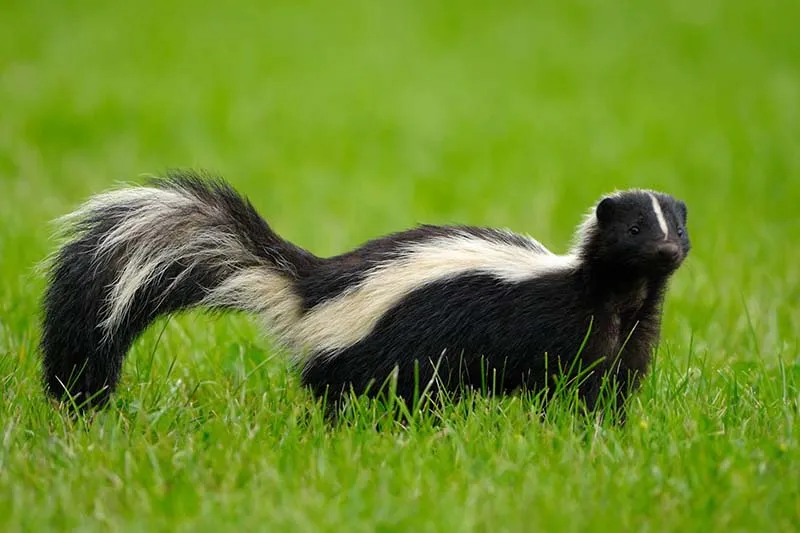
The striped skunk (Mephitis mephitis) is the most common skunk species in Central Texas and is well known for its powerful defensive spray. Despite their reputation, skunks play a natural role in local ecosystems by eating insects, grubs, small rodents, and other pests. They typically avoid people, yet conflicts occur when they search for shelter under decks, sheds, porches, and crawl spaces.
Identification

Skunks are easy to identify by their markings and posture. While striped skunks are the most common, spotted skunks also occur in the region.
- Color: Black or dark brown body with white stripes or spots
- Size: Usually 4 to 14 pounds, about the size of a small cat
- Tail: Large and bushy, often held upright when threatened
- Behavior: Slow moving, low to the ground, nocturnal
When startled, skunks may stomp their front feet or raise their tail as a warning before spraying.
There is no reliable difference in male and female skunk stripes; the stripe pattern is unique to each individual skunk, much like a fingerprint, and varies between individuals regardless of gender. The only significant difference is that males are typically about 10% larger than females.
Behavior and Diet
Skunks are nocturnal foragers that eat a wide range of foods:
- Crickets, beetles, grubs, and other insects
- Small rodents and ground nesting eggs
- Berries, fruit, and nuts
- Pet food left outdoors
- Trash and compost that is not secured
This diet can make them beneficial for reducing certain pests, yet their digging behavior often leads to turf damage in lawns and golf courses.
Where Skunks Live in Central Texas
Skunks prefer areas with cover and reliable food sources. In residential settings, they often settle near structures where shelter is easy to access.
- Under porches, decks, sheds, and crawl spaces
- Near greenbelts, drainage areas, and creek beds
- Inside open garages or storage areas
- Landscaped yards with thick plant beds or compost piles
Neighborhoods near natural corridors in Round Rock, Cedar Park, Lakeway, and South Austin see regular skunk activity, especially during breeding season.
Are Skunks Dangerous
The main concern with skunks is their spray, which contains sulfur-based compounds that cause severe odor, eye irritation, and lingering contamination.
- Spray can travel up to 15 feet and can irritate pets and people
- Skunks can carry parasites such as fleas and ticks
- Rabies exists in wild skunk populations although cases are uncommon
- They may den near homes which increases risk of encounters
Any skunk that approaches people boldly, has difficulty moving, or behaves unusually should be treated with caution.
Signs of Skunks on Your Property

- Persistent musky odor outdoors or under the home
- Small cone shaped holes in yards from digging for grubs
- Tracks with long claws visible in soft soil
- Scratching or movement sounds beneath porches or floors
- Pets sprayed after wandering outside at night
Unlike squirrels or raccoons, skunks rarely break into attics, but they frequently live under structures and use them as den sites.
How to Reduce Skunk Activity
You can limit skunk presence around your home by removing attractants and securing access points:
- Bring pet food inside at night
- Use enclosed trash bins with tight lids
- Seal gaps under decks and sheds with sturdy wire mesh
- Keep compost covered and contained
- Reduce grub populations in lawns
These steps protect both homeowners and wildlife by preventing close contact.
How MB Wildlife Control Handles Skunk Problems
Our approach focuses on humane removal and long term prevention rather than short term solutions.
- Inspection to locate burrows, travel paths, and den sites
- Use of one way doors or species appropriate trapping if needed
- Exclusion work under decks, sheds, and crawl spaces
- Odor control and sanitation where required
- Advice for habitat adjustments that deter future activity
We focus on safe removal that avoids spraying events and prevents new skunks from moving in later.
When to Call a Professional
You should reach out for help if:
- There is a strong recurring odor near the home
- Pets are getting sprayed repeatedly
- Digging damage appears across lawns or flower beds
- There is confirmed denning under the structure
- A skunk appears ill or is active during daylight hours
Trying to trap or chase skunks on your own can lead to spraying, unintended injury, or orphaned young during spring birthing season.
Contact MB Wildlife Control
If you suspect skunks are living on or under your property, we can assess the issue and help solve it safely.
MB Wildlife Control
Phone: (512) 522-1780
Email: [email protected]
Website: www.mbwildlifecontrol.com
