
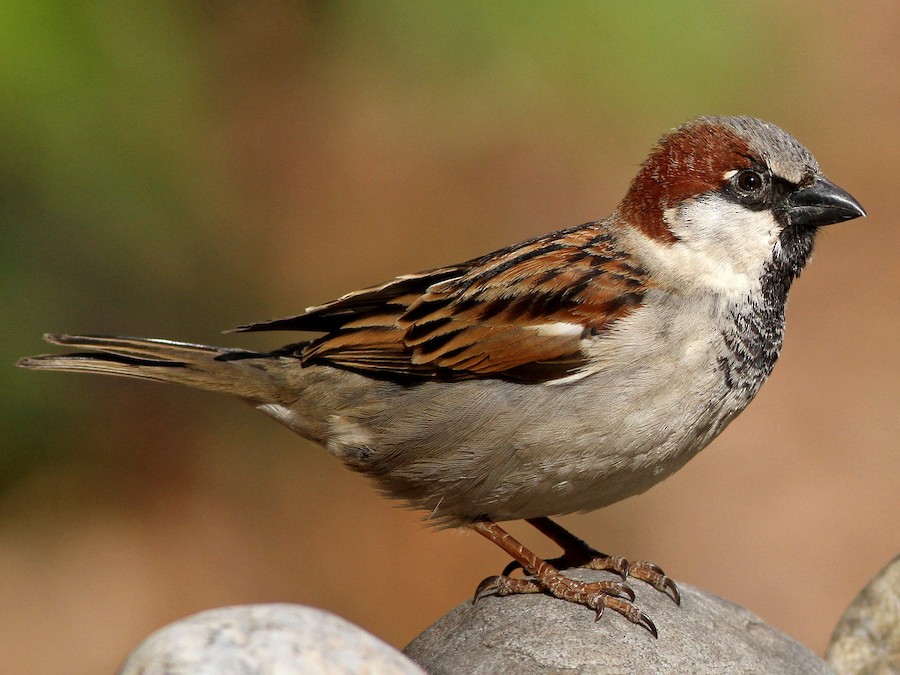
House Sparrows in Central Texas
Understanding a common urban bird and its role in the built environment
What Is a House Sparrow
The house sparrow (Passer domesticus) is one of the most familiar birds found in cities and neighborhoods throughout Central Texas. Originally introduced from Europe, it has adapted extremely well to human environments. You will find them around homes, restaurants, shopping centers, barns, and anywhere food and shelter are available.
While not native, house sparrows are now a permanent part of the urban ecosystem and closely tied to human development patterns.
Identification
House sparrows are small, compact birds with short tails and strong beaks built for cracking seeds. Males and females differ slightly in appearance. Males typically show a gray crown, black throat patch, and chestnut tones along the sides of the head. Females are more subdued in color, with tan and brown streaking that helps them blend into their surroundings.
They are often seen moving in groups and are rarely alone for long.
Behavior and Adaptation
Few birds are as closely tied to human structures as the house sparrow. They prefer to nest in cavities, which makes buildings an ideal substitute for natural nesting sites. In Central Texas, they take advantage of vents, signage, roof gaps, awnings, and small openings in structures.

House sparrows are active during the day and spend much of their time foraging for food. Their diet includes seeds, grains, and insects, especially during breeding season when protein is needed for young birds.
Where They Are Found in Central Texas
House sparrows are closely associated with developed areas. In the Austin region, they are commonly found around shopping centers, restaurants, gas stations, apartment complexes, barns, and residential neighborhoods.
They are particularly drawn to areas where food is readily available and where structures provide protected nesting opportunities.
Ecological Role
Although introduced, house sparrows still contribute to the local ecosystem. They consume insects, especially during the nesting season, which can help reduce certain pest populations. They also serve as prey for hawks, owls, and other native predators.
Their presence reflects how wildlife adapts to human environments. In many ways, they are part of the broader story of how Central Texas landscapes have changed over time.
When House Sparrows Become a Problem

Conflicts arise when sparrows begin nesting inside structures or in areas where cleanliness and airflow are important. Their nesting habits can lead to maintenance issues for both homes and commercial properties.
- Nesting in dryer vents, bathroom vents, and attic openings
- Accumulation of droppings on walkways, signage, and entry areas
- Debris buildup that can block airflow or damage equipment
- Noise and repeated nesting in the same location
Because they are persistent nesters, these problems often return unless access points are properly addressed.
Why Exclusion Is the Best Solution
House sparrows are not effectively managed with repellents or temporary deterrents. Lasting results come from physically preventing access to nesting sites. This includes sealing entry points, installing vent covers, and modifying surfaces where birds prefer to perch.

This approach protects both the structure and the birds by encouraging them to relocate to more suitable areas.
MB Wildlife Control’s Approach
MB Wildlife Control focuses on practical, long term solutions for bird related issues. We identify how and where sparrows are entering or nesting, then install durable exclusion materials that prevent repeat problems.
Our work is designed to blend with the structure, maintain airflow, and reduce ongoing maintenance for property owners and managers.
Contact MB Wildlife Control
If house sparrows are nesting in your vents, roofline, or commercial space, we can assess the situation and recommend a solution that protects your property.
MB Wildlife Control
Phone: (512) 522 1780
Email: [email protected]
Website: www.mbwildlifecontrol.com
