
The 4 Birds Causing the Most Problems for Austin-Area Businesses (And What Actually Works)
If you manage a commercial property in the Greater Austin area, you’ve almost certainly had a run-in with at least one of these birds. And if you’re reading this, it’s probably gone beyond “a minor annoyance” territory.
The good news is that nuisance bird problems are very solvable — but the solution depends a lot on which bird you’re dealing with. They behave differently, nest differently, and respond to different control methods. Here’s a breakdown of the four species we deal with most often at commercial properties across Central Texas, and what actually works to stop them.
1. Pigeons

Pigeons are the most common commercial bird problem we see, and for good reason — they’re adaptable, they breed year-round in Central Texas, and they love the same things commercial buildings offer: sheltered ledges, flat rooftops, loading dock overhangs, and parking structures.
The bigger issue is what they leave behind. Pigeon droppings are acidic enough to corrode metal, degrade concrete, and stain building exteriors permanently if left long enough. On walkways and loading docks, dried droppings become a genuine slip-and-fall liability. And because pigeons tend to return to the same roosting spots obsessively, the problem compounds fast once they’ve established a spot.
What works: Physical exclusion is the only permanent solution for pigeons. Netting, spike systems, and electric track installed on their preferred roosting surfaces will move them off your property for good. Repellents and visual deterrents are largely ineffective — pigeons figure them out quickly.
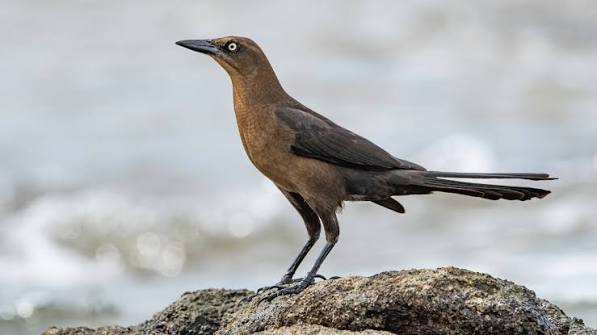
2. Great-Tailed Grackles

If you’ve spent any time in an Austin-area parking lot at dusk, you know exactly what grackles are. They roost in enormous, noisy flocks and they have a particular affinity for retail centers, restaurant parking lots, and outdoor dining areas — basically any commercial property with food nearby and trees overhead.
Grackles are a different problem than pigeons. They’re not roosting on your building so much as in the trees and landscaping around it, and then descending on the property to forage. The result is droppings across a wide area, noise complaints, and customers walking through an experience that’s hard to describe politely.
One thing worth knowing: grackles are actually on the short list of birds that can be controlled without a federal permit in Texas. That gives you more options than you might expect.
What works: Grackle control usually requires a combination of approaches — habitat modification, deterrent systems, and in some cases population management. There’s no single product that solves a grackle problem. A proper site assessment is important here because the solution is property-specific.
3. European Starlings

Starlings tend to fly under the radar compared to pigeons and grackles, but they cause serious problems — particularly for warehouses, distribution centers, and any facility with open dock doors or gaps in the roofline.
They’re aggressive, highly social nesters that infiltrate interior spaces in large numbers. Once they’re nesting in your warehouse rafters, you’re dealing with a contamination issue: droppings falling on product, equipment, and staff below. Their nesting materials — dry grass, feathers, debris — also create a fire hazard around electrical equipment and HVAC systems. And their droppings can carry histoplasmosis, a fungal respiratory disease that’s a real occupational health concern.
Like pigeons, starlings are not protected under the Migratory Bird Treaty Act, which gives you full flexibility in how you deal with them.
What works: Sealing entry points and installing interior netting in affected spaces. The key is a thorough inspection first — starlings find gaps that aren’t obvious, and missing one entry point means the problem continues.
4. House Sparrows

House sparrows are small, which makes people underestimate them. But they’re persistent, they nest in tight spaces that other birds can’t access — signage, electrical boxes, HVAC equipment, eaves — and they’re extremely determined once they’ve picked a spot.
For restaurants and food service facilities specifically, house sparrows are a significant concern. They’ll work their way into any gap near a kitchen or service entrance and their presence near food prep areas is a direct health code issue. They’re also surprisingly hard to exclude from small, irregular spaces if the right materials aren’t used.
What works: Exclusion materials sized and fitted for small gaps — mesh, hardware cloth, and specifically designed sparrow deterrents for signage and equipment cavities. This is detail work that makes a real difference.
The Common Thread
All four of these birds share one important characteristic: once they’ve established a roosting or nesting site, they don’t leave on their own. They’re creatures of habit, and a spot that works for them today will still be working for them a year from now — unless something physical changes.
That’s why the most effective commercial bird control is always exclusion-based. Deterrents, sprays, and visual scare devices can move birds temporarily, but they adapt. A properly installed netting or spike system — fitted to the specific surfaces and entry points on your property — is a permanent fix.
At MB Wildlife Control, we’re a Bird B Gone Authorized Installer serving the Greater Austin and Central Texas area. If you’re dealing with any of the birds above on your commercial property, we’re happy to come out and take a look. Site assessments are free and there’s no obligation.
Learn more about our commercial bird control services or request a free quote.
