
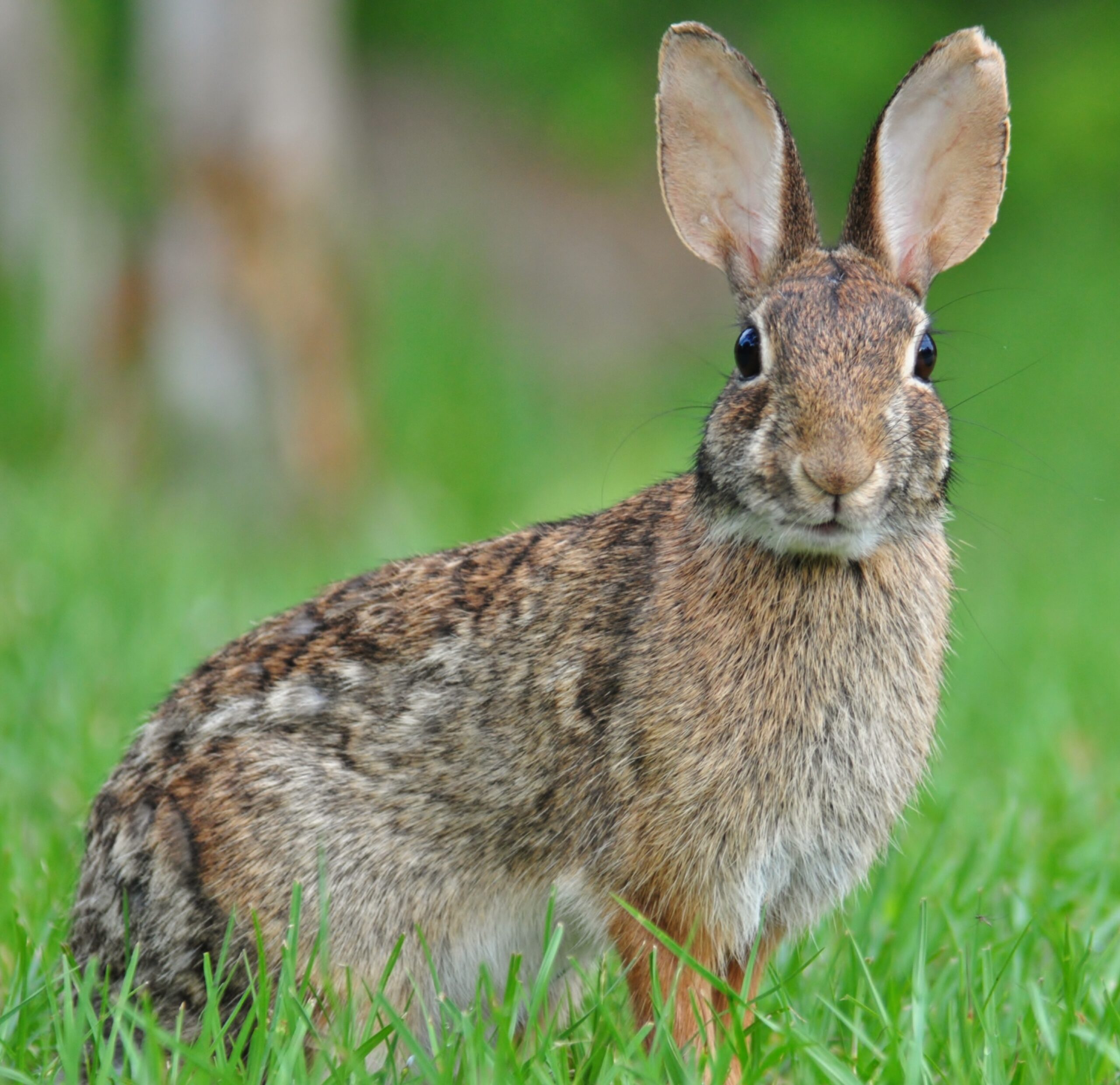
Eastern Cottontails in Central Texas
Understanding a familiar rabbit species and its important role in local ecosystems
What Is an Eastern Cottontail
The Eastern cottontail (Sylvilagus floridanus) is the most common rabbit species found across Central Texas. Known for the white, cotton-like underside of its tail, this small mammal is a familiar sight in yards, fields, parks, and along greenbelts. Eastern cottontails are native to the region and play a vital role in maintaining healthy ecosystems.
Identification
Eastern cottontails are well adapted for blending into grassy and brushy environments.

- Color: Brown to gray fur with lighter underside
- Tail: Short with a bright white underside
- Size: Typically 2 to 4 pounds
- Ears: Upright, medium length, often edged in darker fur
- Body Shape: Compact with strong hind legs for quick escape
They rely on camouflage and sudden bursts of speed rather than burrows for protection.
Behavior and Diet
Eastern cottontails are most active at dawn and dusk. They feed on a wide range of plant material, which helps shape vegetation patterns.
- Grasses and weeds
- Wildflowers and leafy plants
- Bark and twigs during dry or cold periods
- Garden plants and ornamental vegetation
They also practice coprophagy, which allows them to re-digest certain nutrients and survive on lower quality forage.
Habitat in Central Texas
Eastern cottontails thrive in edge habitat, areas where open ground meets brush or woodland. In Central Texas, this includes:
- Residential neighborhoods near greenbelts
- Parks and golf courses
- Roadside vegetation and drainage corridors
- Fencerows and pasture edges
- Brushy creek banks
They do not dig extensive burrows. Instead, they use shallow depressions called forms and dense vegetation for cover.
Ecological Importance
Eastern cottontails are a cornerstone prey species in Central Texas. They support a wide range of predators including hawks, owls, foxes, coyotes, bobcats, and snakes. Their presence helps maintain balance in predator populations.
By grazing on grasses and weeds, cottontails also influence plant diversity and prevent certain species from dominating open areas. Their droppings return nutrients to the soil, contributing to healthier plant growth.

Why You Should Not Remove or Harm Them
Although rabbits may browse on gardens or landscaping, they are an essential part of the food web. Removing or harming them can disrupt local predator behavior and lead to increased pressure on other prey species.

Many young rabbits are mistakenly thought to be abandoned. In most cases, the mother is nearby and returns periodically to feed them. Removing healthy young rabbits often causes more harm than leaving them undisturbed.
When Eastern Cottontails Become a Concern
In rare cases, rabbits may cause persistent damage to landscaping or pose risks when feeding near roads. Vehicle strikes are one of the leading causes of rabbit mortality, especially where feeding attracts them to road edges.
Addressing attractants such as open feeding areas and excessive trimming that removes cover can reduce conflicts without harming the animals.
MB Wildlife Control’s Approach
MB Wildlife Control focuses on education, habitat awareness, and coexistence. Our role is to help property owners understand wildlife behavior and reduce unintended conflicts.
For communities, HOAs, and properties near greenbelts, we provide guidance on landscaping practices that support healthy wildlife populations while improving safety for residents.
Contact MB Wildlife Control
If you have questions about rabbits or other wildlife on your property, we are happy to help explain what you are seeing and when action is appropriate.
MB Wildlife Control
Phone: (512) 522 1780
Email: [email protected]
Website: www.mbwildlifecontrol.com
