
Hog Wild – Too Late for Texas?
Texas Has A Problem
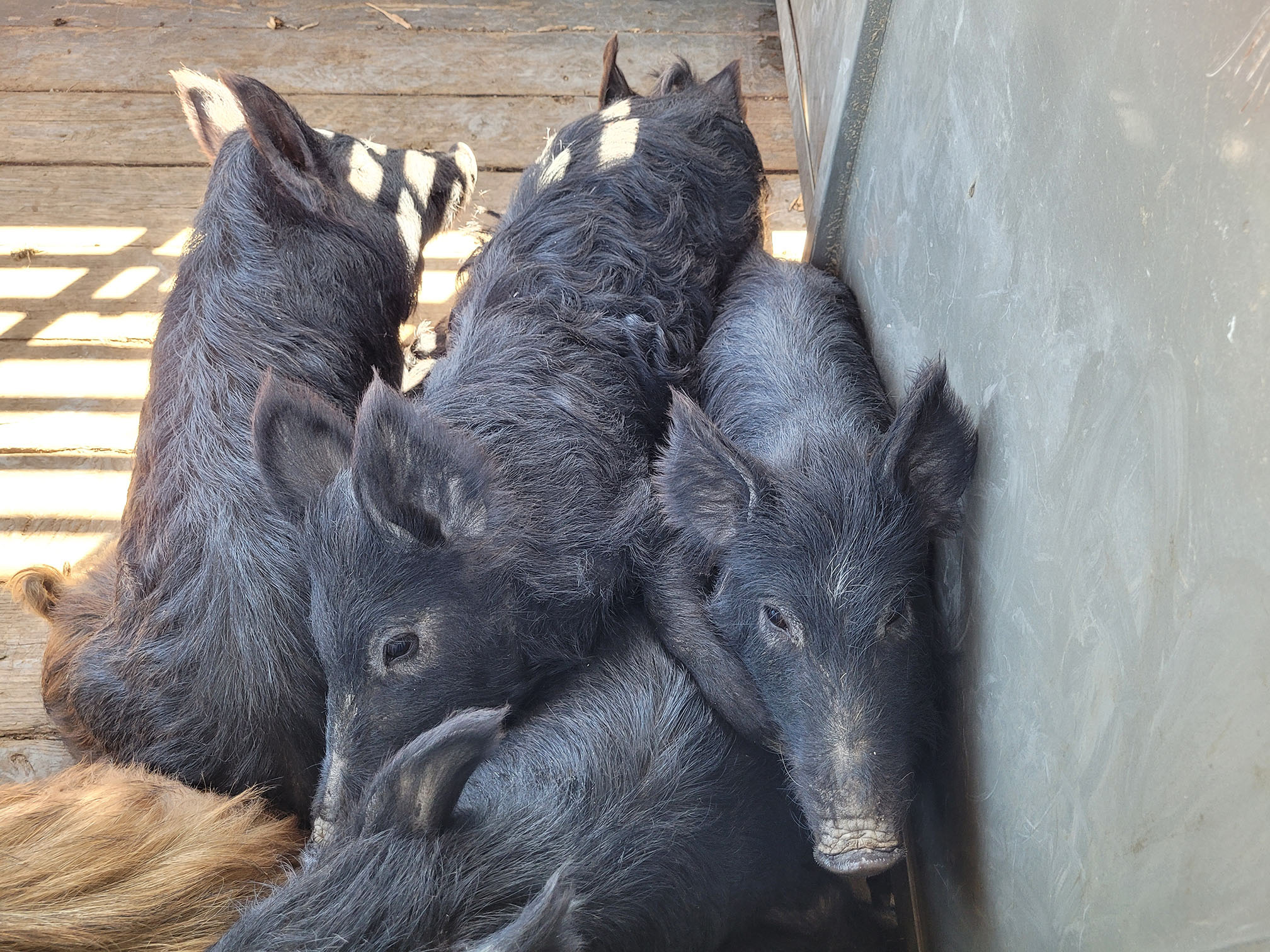
Feral hogs can be found in 99% of Texas counties and cause an estimated $52 million in damages to Texas agricultural enterprises each year. Additionally, feral hogs are causing an increasing amount of damage to landscapes in suburban/urban areas across the state. As of 2024, there are well over 3 million of these “pigs gone wild” in Texas and they aren’t showing signs of slowing. As a state, are we reaching the point where more drastic measures will be required, or can existing means be applied to slow or reverse the destruction of our lands by this livestock run amok?

Feral hogs in Texas are by and large the same species that we recognize as domestic pigs: Sus scrofa. Pigs were brought to North America by the Spanish in the Age of Exploration, roughly the early 1500s. The crew of famed conquistador Hernando De Soto is often credited with bringing pigs as food source for the long voyages and settlement, with many other expeditions following suit. Escapes from enclosures combined with the free-range livestock management practices of the day promoted the spread of pigs across the continent, and the later introduction of Eurasian Wild Boars helped to create a thriving and rapidly expanding population of feral swine.
Did You Know: Domestic pigs, feral hogs, and Eurasian Wild Boars are all the same species.
Pigs are prolific at reproduction. This is, in part, what makes them a desirable livestock species. A sow can have her first litter when she is only 7 months of age, and from then on she can average 1.5 litters per year. Each litter yields on average 4-6 pigs, but can result in as many as 12 (or more). They are also versatile omnivores, and as such are able to survive in a wide variety of environments and climates. An adult male (boar) eats as much as 4500 calories per day, so they have to keep an open mind when it comes to food. Their propensity for eating is what has earned them their gluttonous reputation, and also lands them in hot water with farmers, ranchers, and hunters alike.
While their appetite can lead them to demolish crops, feed, and even raid turkey nests and fawn beds, they also pose a threat to agricultural water sources. Pigs tend to bathe, wallow in, and foul any water source they come across and this can lead to very real risks for infection in livestock and humans that use the water from rivers, creeks, ponds, or tanks where hogs have taken root.
All that being said, feral swine offer a delicious and plentiful food source. The culinary value of the wild hog has been downplayed for decades. However, Texans all over the state as well as top chefs like Jesse Griffiths of Dai Due in Austin, Texas are singing the praises of these villainized creatures due to the flavor and versatility of their meat. Griffiths is the author of the James-Beard-Award-Winning Hogbook, a tome stuffed full of recipes and creative uses for feral swine flesh. “They’re a great unknown out there, and there’s a lot of mythology and misinformation when it comes to them,” Griffith says.

Hunting Vs. Trapping
While hunting feral hogs through traditional means like ambush, spot & stalk, or still hunting is certainly enjoyable, a great source of meat, and can help the pig problem at small scale, the research is showing that it isn’t helping the larger issue. In fact, the creation of a market for hunting pigs is at least partially responsible for their exploding population. More and more hunting ranches are selectively buying up captured feral pigs to create year-round quarry for paying customers.
Feral hogs move in groups called sounders. Sounders can range from a few pigs to over a hundred, but the most common size is between 15 and 40. A sounder is often organized around two or three reproductively mature sows. Sounders can splinter into smaller groups for a variety of reasons as well. For example, mature sows will often venture out with their offspring for foraging. Boars tend to be solitary, but when young they can band together in bachelor groups. Mature boars will often attach to a larger sounder and pull off groups of younger breeding-age sows for themselves.
If you truly want to eliminate a feral hog problem, you have to trap the sounder. This can best be accomplished with a corral trap, which is designed to catch the largest number of animals possible in one fell swoop. The most effective means to remove feral hogs from Texas lands is corral trapping with a remote gate and video/photographic monitoring. This can remove an entire sounder/family group from the landscape and halt their ability to proliferate.
Good Fun, Bad Management
Many trappers and hog abatement services advertise tools such as night-vision hunting, hog dogs, and even shooting them from helicopters. On the surface, these tools might seem desirable, but a quick dive into the research shows that they are ineffective for truly controlling a pig problem. Professor John Tomecek from Texas A&M University likens hunting hogs to blowing on a dandelion in your yard. You destroyed that dandelion, but you’ve dispersed the problem everywhere else on your property now. Plus, hunting simply isn’t an option for many neighborhoods and businesses located in more densely populated areas. To put it more bluntly, in order to address the pressing ecological and agricultural problem presented by feral swine, Texans are going to need to treat them like a threat, and not as an opportunity.
The plain truth is that hunting hogs can be great sport, a good time, and a good source of meat for landowners and trappers, but it doesn’t effectively mitigate feral pig damage and risk on agricultural properties or communities. As well, many commercially available traps that use “continuous catch” doors (that only close one direction but remain accessible from the outside) have been shown by researchers in multiple states to be effective at only capturing a fraction of the animals visiting a trap. A secure, video-monitored corral trap with a gate capable of being triggered remotely has proven time and again to be the most effective means of removing feral hogs from an area. Until the mature sows that are producing litter upon litter of piglets are found eliminated from the landscape, a landowner will continue to see their problem grow.
