
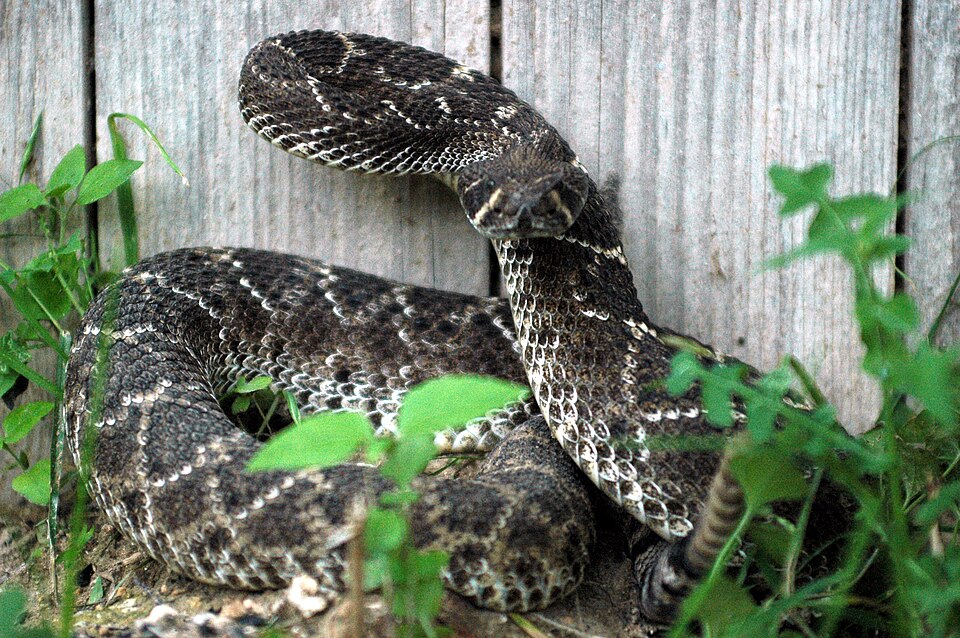
Western Diamondback Rattlesnakes in Central Texas
Understanding an important native species and how to handle sightings safely
What Is a Western Diamondback Rattlesnake
The Western Diamondback Rattlesnake (Crotalus atrox) is one of the most recognizable snakes in the Southwest and a common resident of Central Texas. These snakes prefer rocky hills, open grasslands, greenbelt edges, and warm creeksides. They play a vital role in controlling rodent populations, which helps protect crops, stored animal feed, and even the wiring and insulation in homes.
Despite their reputation, they are not aggressive by nature. They rely on camouflage and retreat when possible. Most encounters occur when a person or pet accidentally steps too close.
Identification

Western Diamondbacks have several distinct features that set them apart from other snakes in the region.
- Pattern: Dark diamond shapes along the back
- Tail: Black and white bands near the rattle
- Head: Wide and triangular
- Eyes: Vertical pupils typical of pit vipers
- Size: Commonly three to five feet long
They use their rattle as a warning, not a challenge. The sound is designed to prevent accidental conflict rather than start one.
Ecological Importance
Rattlesnakes are essential predators that help regulate local rodent populations. One adult rattlesnake can remove hundreds of mice and rats in a single year. This reduces crop damage, limits the spread of disease, and cuts down on structural chewing inside homes, barns, and storage sheds.
A healthy rattlesnake population indicates a functioning ecosystem. Removing or killing them can increase rodent infestations and disrupt natural balance, which affects everything from ground nesting birds to farmers who rely on clean grain storage.
Why You Should Not Kill Rattlesnakes
Attempting to kill a rattlesnake is one of the most common causes of bites in Texas. Striking at a snake, cornering it, or trying to pin it increases the risk significantly. The safest option is to create distance and allow a professional to remove it if needed.
In addition to safety risks, rattlesnakes are protected in various natural areas around Austin, and killing them can harm local ecosystems. They control rodent populations more efficiently than traps or chemicals, and they do not damage property in the process.
Where Western Diamondbacks Live in Central Texas
Rattlesnakes are found in a wide range of habitats. In the Greater Austin area, they are common near:
- Greenbelts and parks
- Creek and river corridors
- Rocky hillsides and limestone outcrops
- Rural land, ranch properties, and barns
- Suburban neighborhoods built near natural spaces
Sightings increase in spring and fall when temperatures are mild, and snakes become more active as they hunt or seek new shelter.
Are Western Diamondbacks Dangerous

They are venomous, which means bites require immediate medical care. However, they do not seek conflict with people or pets. Most bites occur when the snake is stepped on, startled, or handled directly.
Keeping distance is the best safety measure. If the snake is near a home, a play area, or a walkway, professional removal is the safest option for everyone involved.
What To Do If You Find a Rattlesnake
- Give the snake space and keep pets away
- Do not try to kill or handle it
- Watch from a safe distance so you know its location
- Contact a trained wildlife professional if the snake is in a risky location
Rattlesnakes often move on their own once they sense that people or pets are not nearby.
How MB Wildlife Control Can Help
MB Wildlife Control provides safe, humane rattlesnake removal across Central Texas. Our process prioritizes the safety of residents and the conservation of native wildlife. We also offer prevention services for properties near greenbelts, ranch land, parks, and golf courses.
- Emergency snake removal
- Barrier installation and rattlesnake fencing
- Property inspections to identify habitat attractants
- Education for homeowners and HOAs
We never use poisons or repellents. Our methods protect both people and the natural environment.
Contact MB Wildlife Control
If you encounter a rattlesnake or want to reduce the chance of snakes around your property, MB Wildlife Control can help with safe removal and prevention.
MB Wildlife Control
Phone: (512) 522 1780
Email: [email protected]
Website: www.mbwildlifecontrol.com
